
Do I need a new consumer unit?
Your consumer unit protects every circuit in your home. Here is how to tell whether yours is due an upgrade, and what a modern one does differently.
Signs it may be time
Many older consumer units still work, but they do not offer the protection that modern units do. These are the signs we look for.
- Rewireable fuses with fuse wire, rather than circuit breakers
- No RCD protection, or a single RCD covering every circuit so one fault switches off the whole house
- A wooden backboard, a cracked case or signs of overheating
- Breakers that trip with no obvious cause
- No spare space for new circuits such as an EV charger, garden room or extension
- An EICR that recommends replacement
What a modern unit includes
Since January 2016, consumer units in homes have had to be housed in a non-combustible enclosure, usually steel. That change followed fires starting in plastic units, often from loose connections.
A modern board will normally include RCD protection on every circuit, ideally using RCBOs so each circuit is protected individually and a fault only switches off that one circuit. Surge protection is usually included too, to protect electronics from voltage spikes. In some properties, arc fault detection devices may also be recommended.
Testing comes first
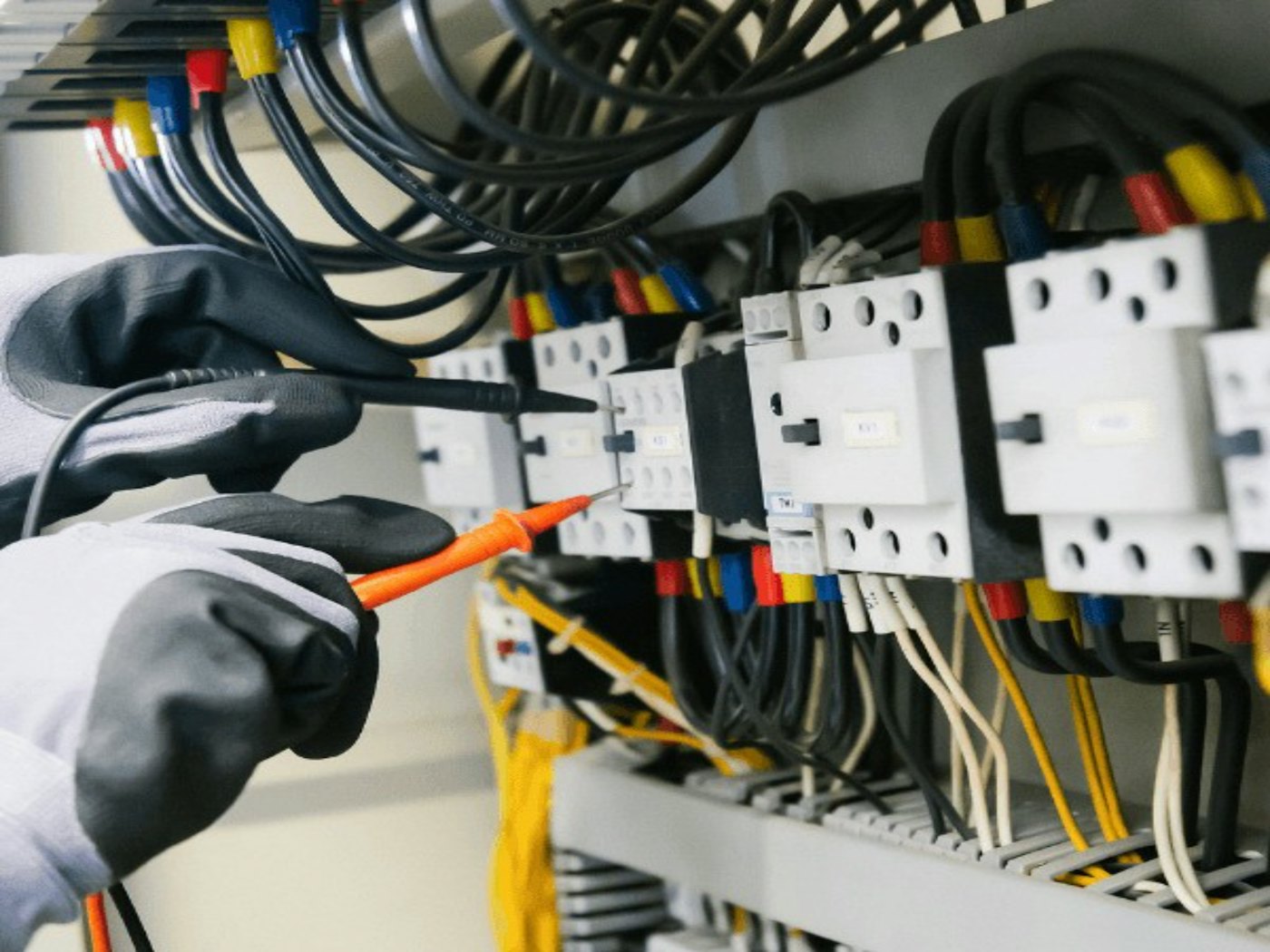
Before a new consumer unit is connected, every existing circuit should be tested. An old fuse box will not notice some faults that a modern RCD will. If those faults are not found and fixed first, a new board can trip as soon as it is switched on.
This is the main reason a consumer unit change should never be a quick swap. It is also why the price depends on the condition of your existing wiring.
What happens on the day
Most replacements take a day, with the power off for much of it. Your electrician should agree a time with you and check anything that must stay running, such as freezers or medical equipment. At the end you should get a clearly labelled board, an Electrical Installation Certificate and, because the work is notifiable, a building control compliance certificate.
Common questions
Is a plastic consumer unit illegal?
No. Existing plastic units are not illegal, but new installations in homes must be non-combustible. An EICR may recommend replacement depending on the location and condition.
Do I need building control approval?
A consumer unit replacement is notifiable. A registered electrician, such as an NICEIC Approved Contractor, can self-certify and notify it for you.
Will I need a new consumer unit for an EV charger?
Not always. It depends on spare capacity and the protection in your existing board, which should be checked at the survey.
This guide is general information for properties in England and is not a substitute for an inspection by a qualified electrician.
More guides.
Why does my RCD keep tripping?
An RCD that trips is protecting you. Here is what it is telling you, how to narrow down the cause safely, and when it is time to call an electrician.
Read the guide Home, 5 min readSigns your house needs rewiring
Rewiring is a big job, so it is worth knowing when it is genuinely needed. Here are the signs that matter, and the ones that often do not.
Read the guideAll guides
Browse every guide and our free EICR due date checker.
Tell us about the job.
A few details is plenty. We will come back to you to arrange a visit and a written quote.