
Electrical work in listed buildings.
Old wiring in a listed building still has to be safe, but the building itself is protected too. Here is how to plan electrical work so it meets the regulations without harming the character that makes the building special.
What listing protects
In England, buildings are listed at Grade I, Grade II* or Grade II. Listing covers the whole building, inside and out, not just the front elevation. Original fixtures and fittings, plasterwork, panelling, ceilings and floors are all part of what is protected, and so can structures within its grounds.
That matters for electrical work, because almost every electrical job touches the fabric of the building somewhere: a cable route through a wall, a fitting on a ceiling, a board on a wall, or a light on the outside.
Do you need listed building consent?
Listed building consent is needed for works that affect the character of the building as one of special architectural or historic interest. Carrying out such works without consent is a criminal offence, and the responsibility sits with the owner, so it is worth checking before work starts.
Like-for-like repairs and replacing an existing fitting in the same place often do not need consent. Work is more likely to need it where it involves new cable routes through historic walls, chasing into old plaster, removing original features, fixing new equipment to decorative surfaces or adding lights and equipment to the outside. Your council's conservation officer can tell you which applies. They usually want to see what will be done, where cables will run and how the building will be protected.
- Speak to the conservation officer before you commit to a scheme
- Ask your electrician for a short written method and cable route plan
- Keep photographs of the existing installation before work starts
- Allow time in the programme if consent is needed
The regulations still apply
Being listed does not exempt a building from electrical safety rules. New work must still meet BS 7671, the wiring regulations, and work in homes that is notifiable under Part P of the Building Regulations still needs certifying. Fire safety, emergency lighting and alarm requirements for public and commercial buildings apply as normal.
The skill is in meeting those rules in a way that respects the building, which is why the planning stage matters so much in a listed property.
Start with an inspection
Before any scheme is drawn up, the existing installation should be inspected and tested with an Electrical Installation Condition Report. In older buildings it is common to find a mix of ages: some original equipment, some mid-century wiring, and later additions. Some of it may be perfectly serviceable. Some, such as rubber or lead sheathed cable, will need replacing.
An inspection tells you what can stay, what must change, and where existing routes can be reused, which is the single best way to reduce disturbance to the building.
Rewiring without harming the fabric
The least damaging cable route is usually one that already exists. Old conduits, floor voids, roof spaces, service ducts and the backs of cupboards can often take new cables with little or no disturbance. Lifting floorboards is generally better than chasing walls.
Where cables have to run on the surface, they can be routed along skirtings, cornices and architraves, painted to match, or run in slim fire-resistant cable that is designed to be seen. Fixings go into mortar joints rather than the faces of brick or stone. Chasing into lime plaster, lath and plaster or decorative finishes is avoided wherever possible.
- Reuse existing routes and voids before creating new ones
- Lift boards rather than chase walls
- Run surface cables along existing lines, neatly and discreetly
- Fix into mortar joints, not stone or brick faces
- Protect floors, panelling and ceilings throughout the work
Lighting that suits the building
Modern LED lighting is well suited to historic interiors. It runs much cooler than old fittings, which reduces the risk to delicate surfaces, and lasts far longer, so there is less need for access to high ceilings. Warm white light can be hidden on top of cornices or panelling to wash walls and ceilings, so you see the building, not the fittings.
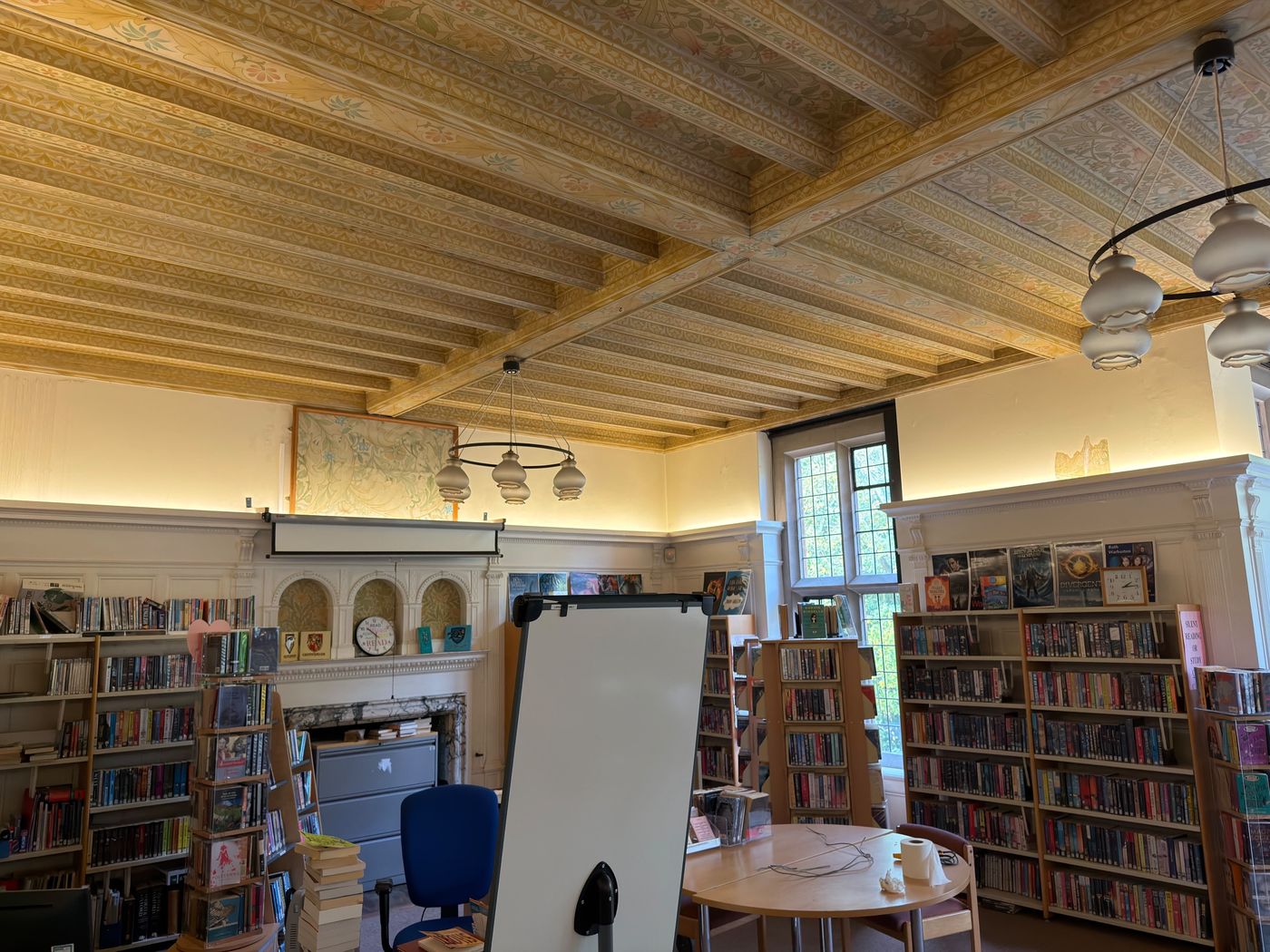
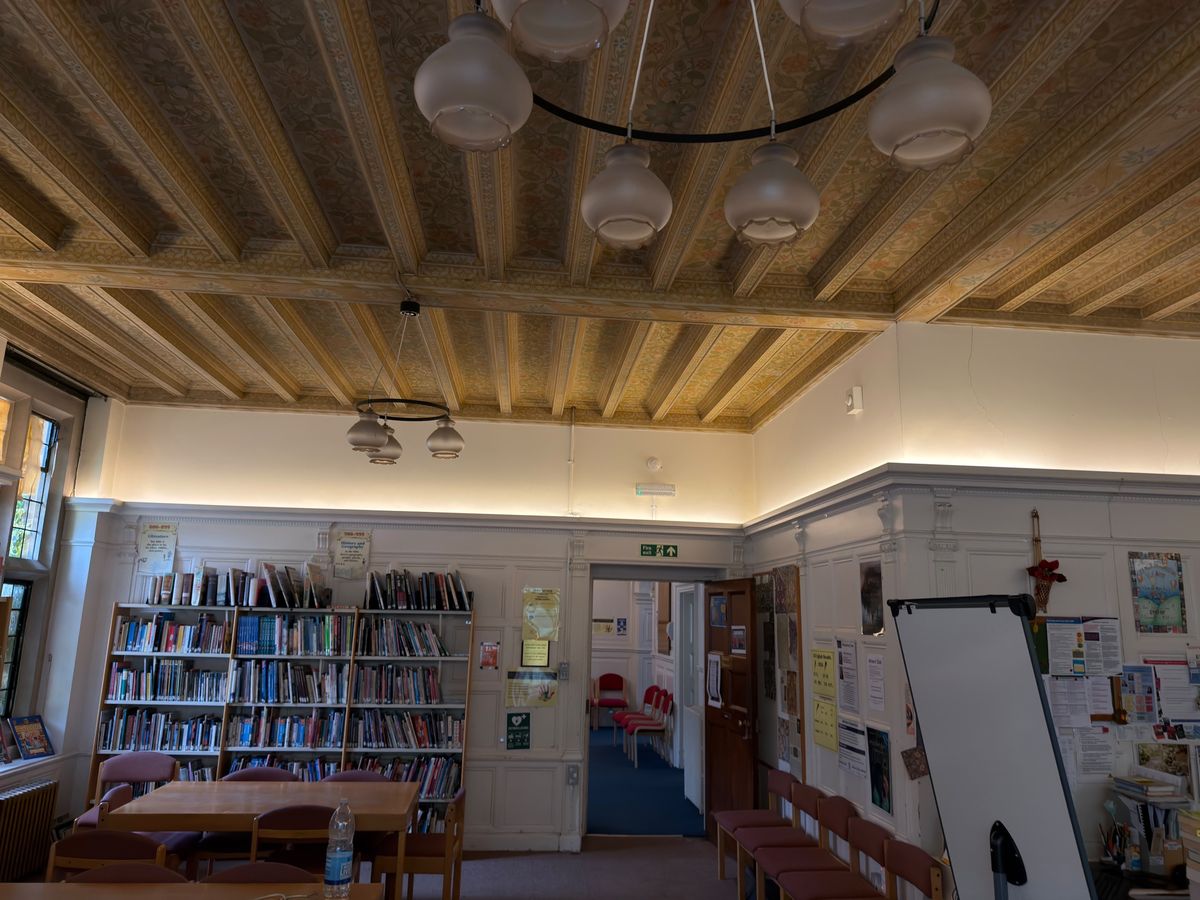
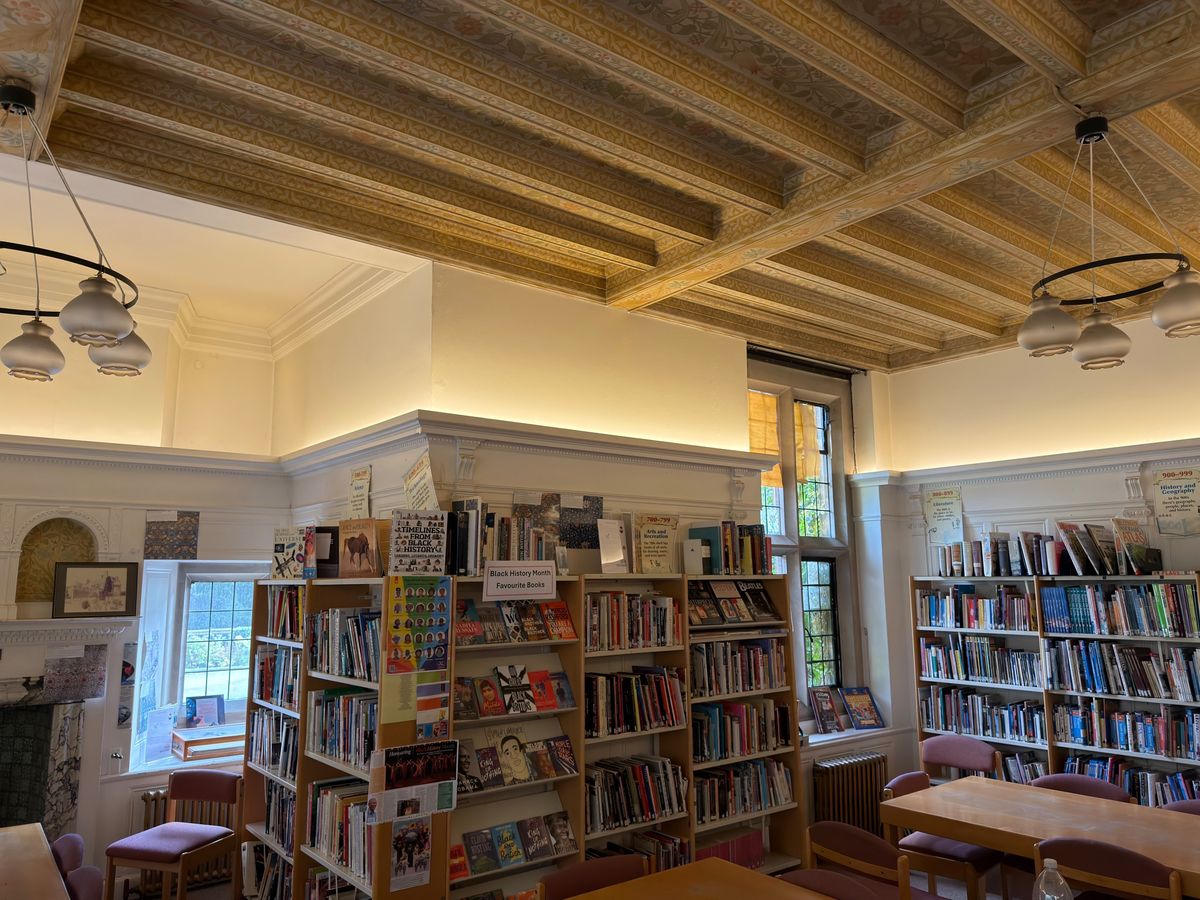
In the library at Bullers Wood School for Girls, a Grade II* listed house in Chislehurst, we replaced old fluorescent battens on top of the panelling with warm LED uplighting that lights the original Morris and Company painted ceiling without anything being fixed to it.
Fire alarms and emergency lighting
Historic buildings used by the public still need fire detection and emergency lighting that meet the relevant standards. Discreet detectors, slim emergency fittings and self-contained exit signs keep the visual impact low. Where running new cables would mean real damage, wireless fire alarm systems can be a sensible option, as they need far less cabling through historic fabric.
Original switchgear and records
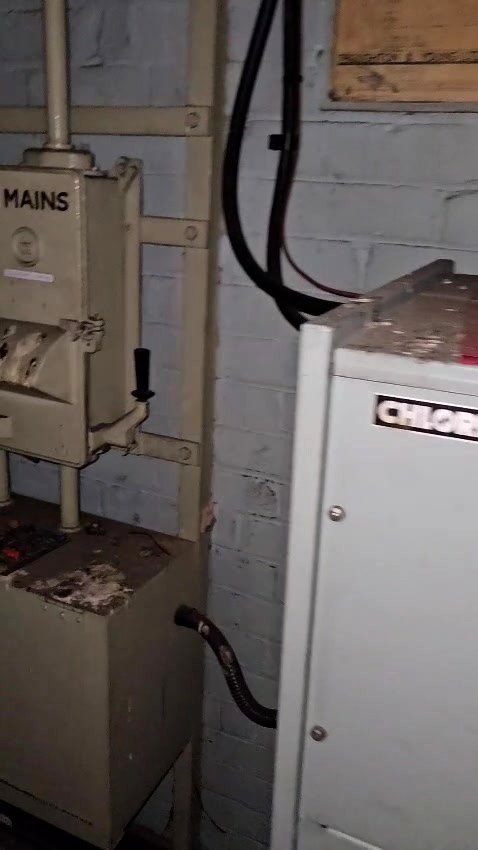
Older buildings sometimes still contain original switchgear, fuse boards or even DC supply equipment. These need identifying, recording and making safe. Some are worth keeping in place, isolated, for their historic interest. At Ruach City Church in Kilburn, the former Gaumont State Cinema, our inspection recorded original 1930s switchgear and a 240 volt DC switchroom alongside the modern supply.
At the end of any job in a listed building, keep the certificates, a record of what was changed, cable route drawings and before and after photographs together. They make future work easier, and they are exactly what a conservation officer or future owner will want to see.
Common questions
Do I need listed building consent to rewire a listed house?
Often, if the rewire involves new routes through historic walls, chasing old plaster or changes to original features. Speak to your council's conservation officer before work starts. Like-for-like repairs are less likely to need consent.
Does a listed building still need to meet the wiring regulations?
Yes. New electrical work must meet BS 7671, and notifiable work in homes still needs certifying under Part P. The aim is to meet the rules in a way that respects the building.
Can wiring be hidden in a listed building?
Usually much of it can, using existing voids, floor spaces and old routes. Where cables must be on show, they can be run neatly along existing lines and painted to match.
Is LED lighting suitable for historic interiors?
Yes. LED runs cooler and lasts longer than older fittings, and warm white fittings hidden on cornices or panelling can light a room beautifully without visible fittings.
Can you work with our conservation officer?
Yes. We can provide a written method, cable route plan and photographs for the conservation officer, and keep records of everything we change.
This guide is general information for properties in England and is not a substitute for an inspection by a qualified electrician.
More guides.
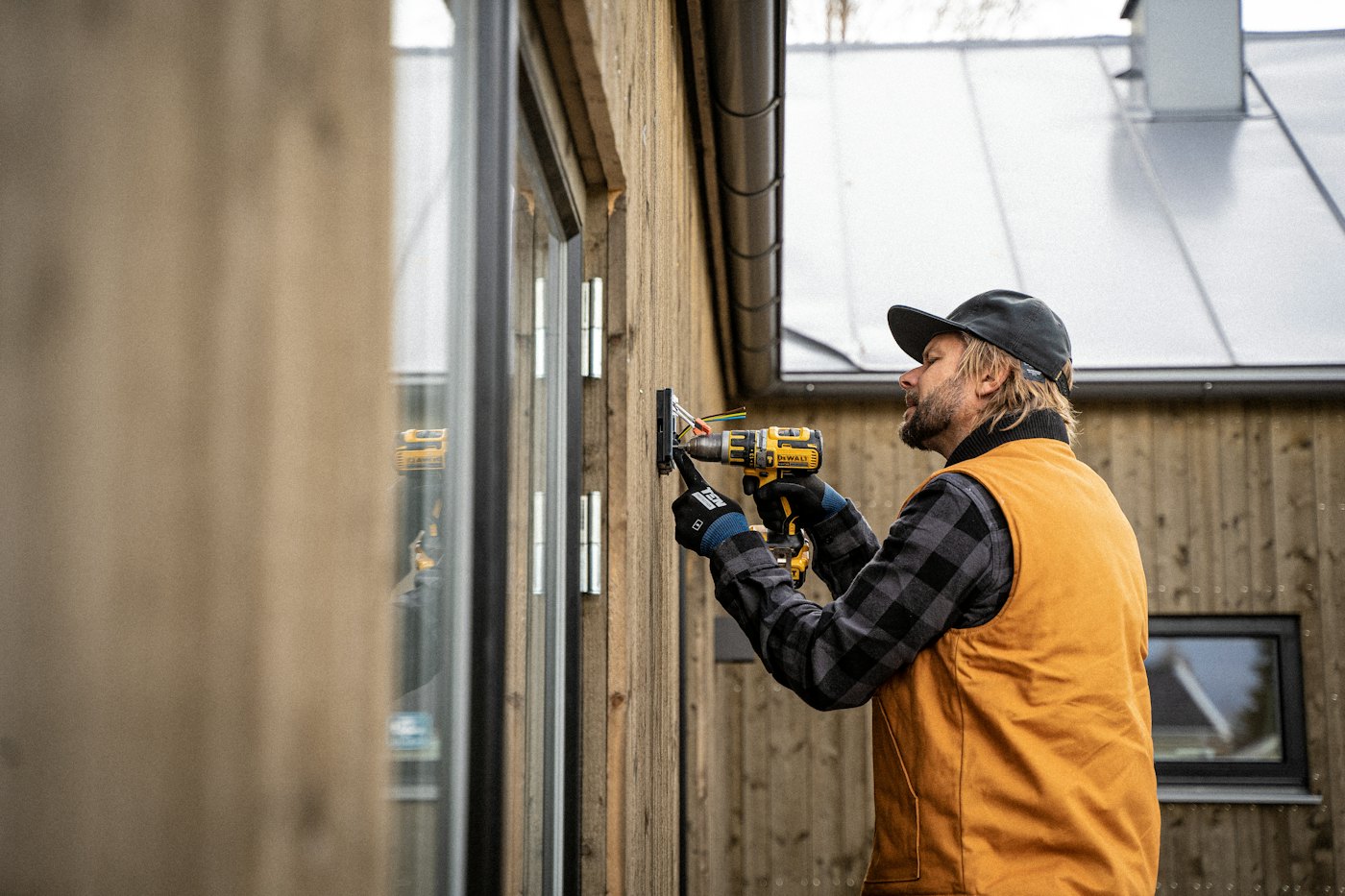 Home, 5 min read
Signs your house needs rewiring
Rewiring is a big job, so it is worth knowing when it is genuinely needed. Here are the signs that matter, and the ones that often do not.
Read the guide Testing, 5 min read
EICR codes explained: C1, C2, C3 and FI
An Electrical Installation Condition Report can look like a list of alarming codes. Here is what each one means and what you actually need to do about it.
Read the guide Home, 7 min read
Fire alarm grades explained
Grade D1 LD2, Grade A LD2, Grade D2 LD3. If a council, surveyor or fire risk assessor has given you a specification like this, here is what each part means and what gets fitted.
Read the guideAll guides
Browse every guide and our free EICR due date checker.
Tell us about the job.
A few details is plenty. We will come back to you to arrange a visit and a written quote.