
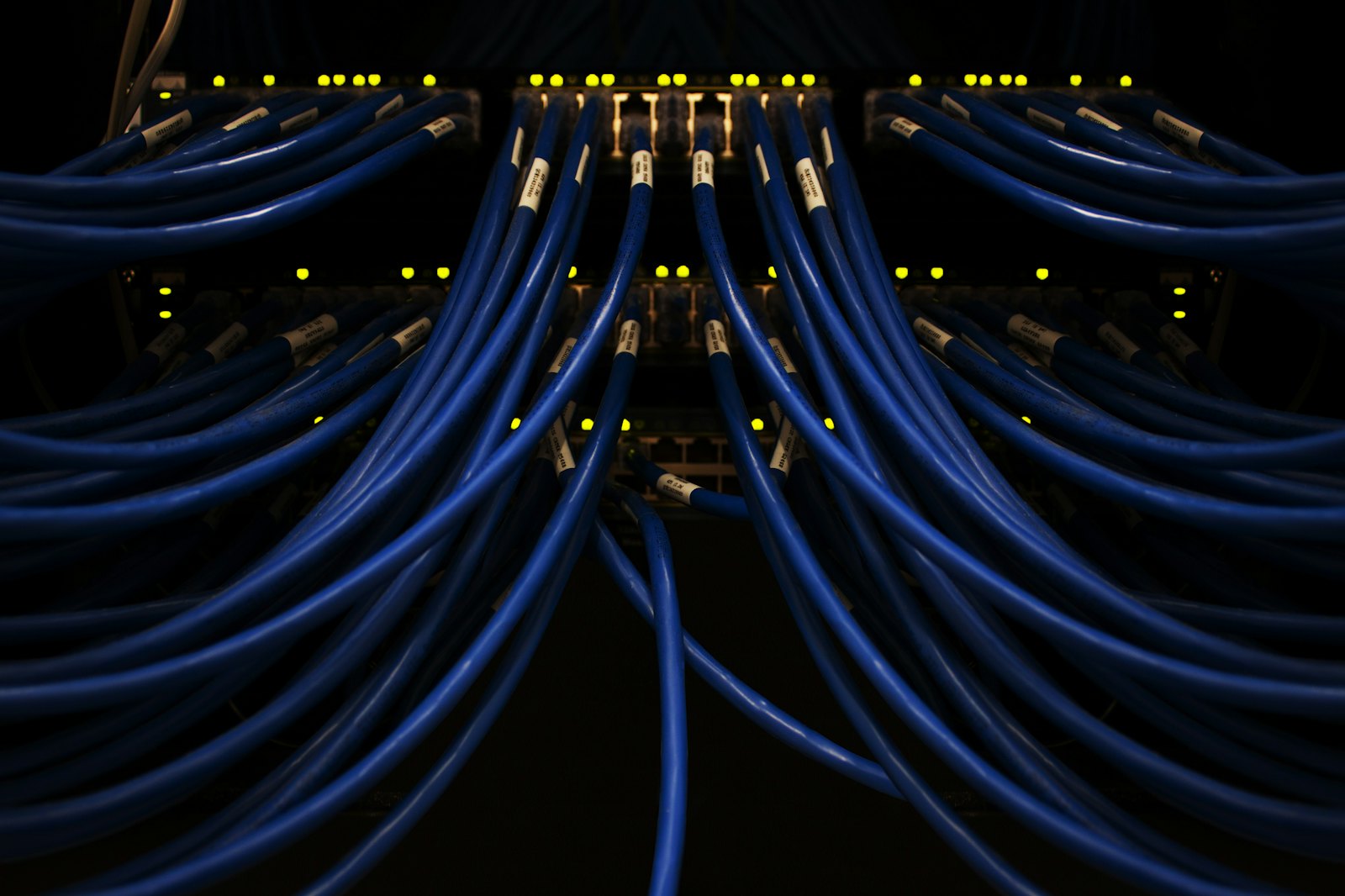
Cat6 vs Cat6a: which should you choose?
Both are common choices for office and commercial networks. Here is how they differ in practice, and how to decide which suits your building.
The short answer
Cat6 supports gigabit speeds comfortably over the full 100 metre channel and is a sound choice for many offices. Cat6a supports 10 gigabit over the full 100 metres, handles higher Power over Ethernet loads better and gives more headroom for the future. For new installations expected to last ten years or more, Cat6a is often the better investment.
Speed and distance
Cat6 is rated to 250MHz. It carries 1 gigabit to 100 metres and can carry 10 gigabit over shorter runs, typically up to around 55 metres in good conditions. Cat6a is rated to 500MHz and carries 10 gigabit over the full 100 metre channel.
Many modern Wi-Fi access points and switches use 2.5 or 5 gigabit ports. Both categories generally support these speeds, but Cat6a gives more margin, particularly in busy cable bundles.
Power over Ethernet
Access points, cameras, phones and door controllers are often powered over the data cable. Higher power PoE standards push more current through the cable, which generates heat, especially in large bundles. Cat6a's larger conductors and construction handle that heat better, which is one reason it is popular for access point and camera runs.
The practical differences
Cat6a is thicker and stiffer. It needs more space in containment and cabinets, a larger bend radius and more care during installation. That means a slightly higher material and labour cost, and it is worth checking your containment has room.
- Cat6: lower cost, easier to install, ideal for desks and phones on gigabit networks
- Cat6a: 10 gigabit to 100 metres, better for PoE, more future headroom
- Mixing is common: Cat6a for access points and cameras, Cat6 for desks
- Whichever you choose, every link should be tested with a certifier and documented
Installation matters as much as category
A badly installed Cat6a link can perform worse than a well installed Cat6 one. Tight bends, over-tightened cable ties, damaged pairs and poor terminations all cost performance. Ask for test results for every link at handover. They are your proof of what was installed.
Common questions
Is Cat7 or Cat8 worth it?
For most offices, no. They are mainly used in data centres and specialist applications, and are not as widely supported by standard office connectors.
Can I reuse my existing cabling?
Sometimes. Testing existing cabling will show what it can support before you decide.
When should I use fibre instead?
For runs beyond 100 metres, between buildings or floors, or for backbone links between switches.
This guide is general information for properties in England and is not a substitute for an inspection by a qualified electrician.
More guides.
Emergency lighting testing: what you need to do
If you are responsible for a workplace, shop, block of flats or other non domestic building, emergency lighting is part of your fire safety duties. Here is what testing involves.
Read the guide Testing, 5 min readEICR codes explained: C1, C2, C3 and FI
An Electrical Installation Condition Report can look like a list of alarming codes. Here is what each one means and what you actually need to do about it.
Read the guideAll guides
Browse every guide and our free EICR due date checker.
Tell us about the job.
A few details is plenty. We will come back to you to arrange a visit and a written quote.