
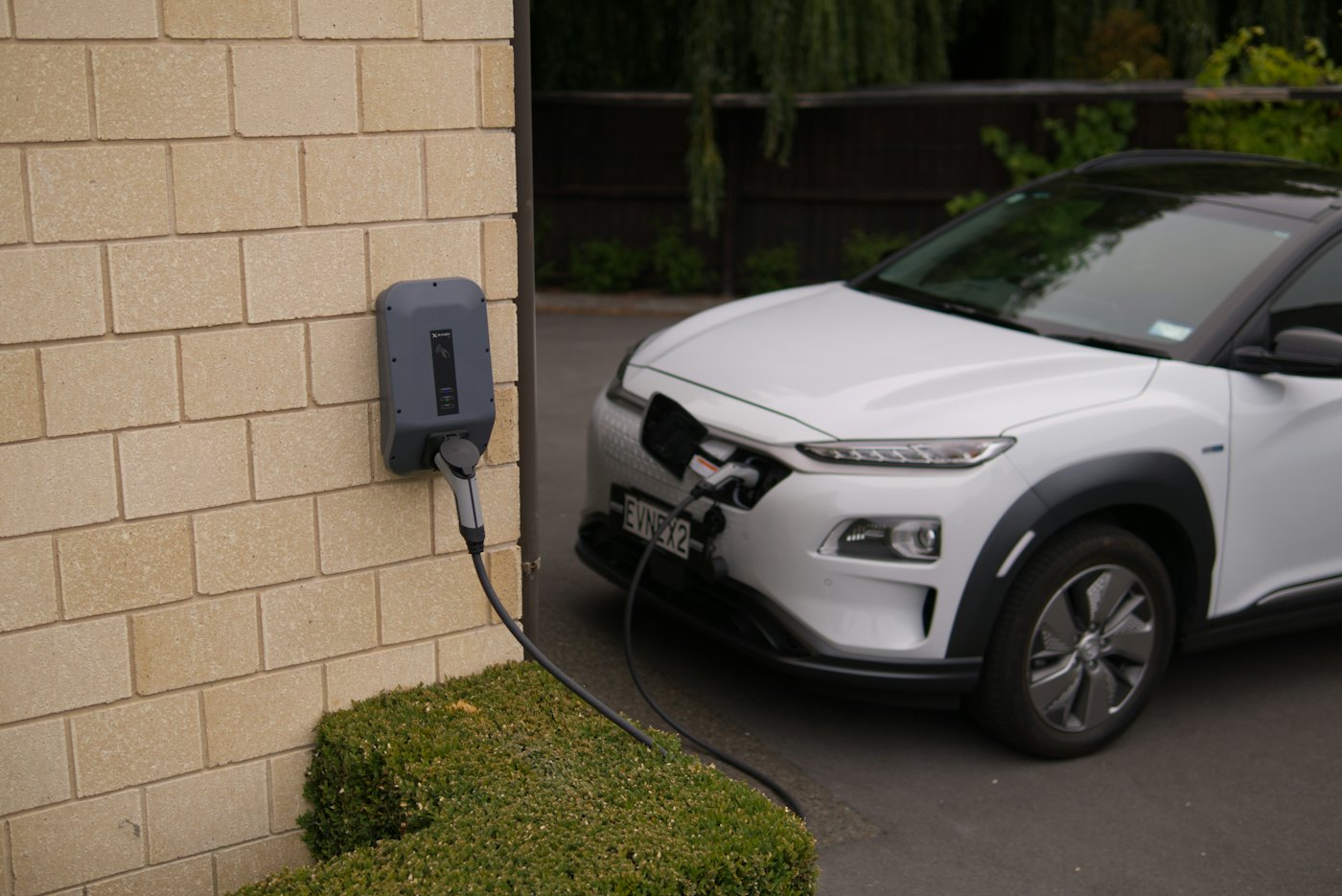
Installing an EV charger at home: what is involved.
A home charger is the cheapest and most convenient way to run an electric car. Here is what happens between deciding you want one and plugging in.
Why not just use a three pin plug?
A normal socket can charge a car slowly, but it is not designed to supply a heavy load for hours at a time, and extension leads make it worse. A dedicated charger on its own circuit is faster, safer and lets you schedule charging for cheaper overnight tariffs.
Most home chargers are rated at around 7kW on a single phase supply, which adds very roughly 20 to 30 miles of range per hour, depending on the car.
What the survey checks
Every home is different, so a proper survey comes first. It looks at whether your property can take the extra load safely and where the charger should go.
- The size of your main fuse and how much electricity you already use at peak times
- How your property is earthed, and whether an earth rod or built-in protection is needed
- Space and suitable protection in your consumer unit
- The cable route from the consumer unit to your parking space
- A mounting position that suits your car's charging port and keeps the cable off the path
- Whether a load management device is needed to avoid overloading your supply
Smart charging rules
Home chargers sold and installed in Great Britain must meet the Electric Vehicles (Smart Charge Points) Regulations. In practice that means they can connect to the internet, let you schedule charging, and charge at randomised times by default to spread demand on the network.
Notifying the network operator
The installer must notify the local distribution network operator when a charger is fitted. Across most of Kent and London that is UK Power Networks. In a small number of cases, usually where the supply is small or shared, the network operator may need to approve the installation or upgrade the supply first.
Grants and parking
Government grants for home chargers have changed several times and are now aimed mainly at people who live in flats or rent. Check the current scheme rules before you commit.
The charger and cable need to stay on your own property. Running a cable across a public pavement is not allowed unless your council runs an approved scheme, so a charger is usually only practical with a driveway or private parking.
How long it takes
Once the survey is done and any upgrade work agreed, most installations take half a day to a day. Before leaving, your electrician should test the circuit, connect the charger to your Wi-Fi, set up the app with you and give you an electrical certificate.
Common questions
Do I need three phase power for a home charger?
No. Almost all homes use 7kW single phase chargers. 22kW chargers need a three phase supply, which most homes do not have.
Can I install a charger myself?
No. It is a new circuit with specific earthing and protection requirements, and the network operator must be notified. It needs a qualified electrician.
Can I charge from solar panels?
Some chargers can prioritise surplus solar power. If you have or plan to add solar, mention it at the survey.
This guide is general information for properties in England and is not a substitute for an inspection by a qualified electrician.
More guides.
Do I need a new consumer unit?
Your consumer unit protects every circuit in your home. Here is how to tell whether yours is due an upgrade, and what a modern one does differently.
Read the guide Home, 6 min readWhy does my RCD keep tripping?
An RCD that trips is protecting you. Here is what it is telling you, how to narrow down the cause safely, and when it is time to call an electrician.
Read the guideAll guides
Browse every guide and our free EICR due date checker.
Tell us about the job.
A few details is plenty. We will come back to you to arrange a visit and a written quote.